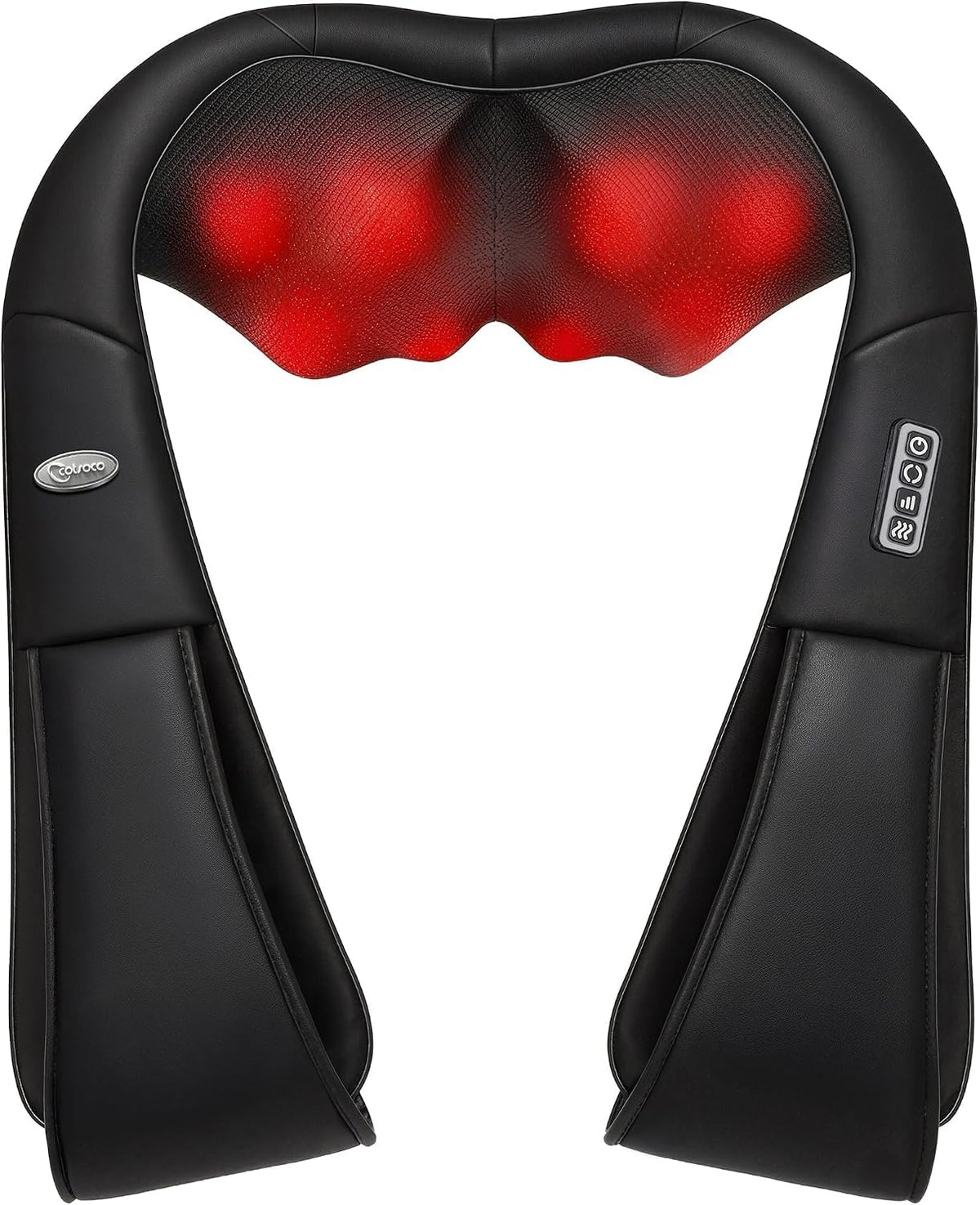

Introduction: A handheld massager that names the neck, shoulders, upper back, and waist is describing where people want everyday relaxation, not a treatment plan for those areas.
When people compare handheld massagers, they usually start with the same short list of body areas. The Digitnow handheld neck and back massager is described with the neck, shoulder, upper back, waist, arms, legs, and feet as relaxation areas. this guide stays with the upper-body group and sorts the neck, shoulders, upper back, and waist by the everyday situations that make each one feel different. It also explains why a body-area name works as a use description, and why it is a much smaller statement than a claim about treatment, rehabilitation, or who can safely use the tool.
How the Neck Shoulder and Upper Back Areas Create Different Relaxation Needs
The three areas sit within a hand's width of each other, yet they rarely feel the same at the end of a day. A neck that stiffens during a screen-heavy afternoon, a shoulder that carries a bag strap on the same side every morning, and an upper back that tightens after a long drive are three separate situations with three different postures. A product description flattens all of that into one comma-separated line, which is why the areas can look interchangeable when they are not. Everyday use is the better sorting key, because each area is reached differently: the neck and shoulder usually from a seated or standing position with one hand, and the upper back by reaching behind the shoulder blade. The same tool shape is sold under several names, whether a handheld massager, a handheld muscle massage hammer, or a deep tissue handheld massager, and most of those descriptions lead with body areas rather than with posture. That is a reasonable way to help someone recognize whether the product matches their routine. It is a different thing from describing how the tool behaves on any particular muscle. Keeping those two ideas apart makes the area list easier to use: it tells you where the tool is intended to travel, and your own routine tells you whether that travel makes sense for you.
1. Why Neck and Shoulder Descriptions Often Focus on Reach and Comfort
The neck sits right under the head and the shoulders sit just below it, so the practical question for a handheld tool is whether the user can place it there without craning, twisting, or lifting an arm above shoulder height. That is why neck and shoulder wording tends to travel with ideas like reach and comfort rather than with force. The tool is held and moved by the user, so the arm sets the angle and the amount of contact. The Digitnow description names both areas for relaxation and leaves pressure level and session length open, which is a fair reading of what it says: the area names describe placement, and the user's own hand decides how much contact happens.
2. Why Upper Back Descriptions Need Careful Reading Around Everyday Use
The upper back sits between the shoulder blades, and it is the hardest of the three areas to reach with your own hand. A listed relaxation area here is best read as a posture question, because sitting upright, leaning back against a chair, standing, or lying down each change how easily the tool gets there. It is also the area where readers most often borrow clinical language. Back discomfort is a broad topic with many causes, as the NHS back pain material makes clear, and a named relaxation area is a far narrower statement than anything about causes or treatment. The area name tells you where the tool is meant to be used. What is going on in your back is a separate question with a separate answer.
How Waist Relaxation Is Described for This Handheld Massager
The waist belongs with the upper-body group in a practical sense. It is reached from a seated or standing position, usually with a downward hand, and the everyday triggers line up with the neck and shoulders more than with the limbs. Long sitting, long driving, standing at a counter, and lifting all put the waist and lower-back region into the same daily story as the shoulders. For a handheld tool, that means a different working posture from the neck. The hand comes down rather than up, the arm has more room, and the user can usually see the area without a mirror. The Digitnow description names the waist as a relaxation area alongside the neck, shoulders, and upper back. Daily-use guidance, session length, and suitability for people with existing back or neck conditions sit outside that group of names, so the waist listing is a starting point rather than a full answer. Someone who plans to use a handheld massager on the waist every day is making a routine decision that the description leaves to them and to the instructions supplied with the unit. Reading the area name as "this is a place the tool is designed to reach" keeps expectations in the right place and stops a comma in a description from doing the work of a medical opinion.
How Skeletal Muscle Basics Help Readers Read Body-Area Descriptions
OpenStax anatomy material describes skeletal muscle as tissue that attaches to bone and pulls across joints, arranged in layers and working in groups rather than as single uniform bands. That matters when you read an area name. The neck is not one muscle. The shoulder is a joint with several muscles crossing it in different directions. The upper back carries muscle layers that sit over the rib cage and between the shoulder blades, and "waist" describes a region of the trunk rather than a single point. A description that says "neck" or "shoulder" is therefore naming geography, and geography is coarse by design. Muscles also respond to posture and load. A long stretch of sitting with the head forward keeps some muscles working at a low level for hours, which is one reason everyday tightness is usually described in terms of the day rather than in terms of one sore spot. That background explains the why behind the wording. A product description can name a region because a region is a place, while a diagnosis names a condition in a person, and a professional assessment sits between those two. Knowing that gap is useful in practice, because it keeps the body-area list in its proper role as a map of where the tool is meant to travel during a relaxation session.
Conclusion
Readers comparing handheld massagers do not need a medical briefing. They need to know what the area list is doing. Neck, shoulder, upper back, and waist appear on the Digitnow description as relaxation scenarios, and each one brings a different posture: an easy reach at the neck, a harder one at the upper back, a downward reach at the waist. Pressure, session length, and daily-use guidance are left to the user and the instructions that come with the unit. Anyone who wants the exact published facts can open the listing and take the areas as they are written, then match them to their own routine.
FAQ
Q: What body areas does the Digitnow handheld massager list for relaxation?
A: The description names the neck, shoulder, upper back, waist, arms, legs, and feet as relaxation areas, and the product itself is a black handheld unit built around that everyday use. All seven names describe where the tool is intended to be used for relaxation. They are use descriptions, so they say nothing about treatment outcomes, rehabilitation, or suitability for every person.
Q: Does listing neck, shoulder, and back areas mean the massager treats pain?
A: No. The neck, shoulder, upper back, and waist names describe where the tool is meant to be used, and a use description is a different kind of statement from a treatment claim. Pain has many causes, and matching an area name to pain is not something a product description can settle. Readers who want to use the tool on a specific area can treat the area list as placement information and take the rest of the question to their own judgment or to a clinician.
Q: Can the Digitnow handheld massager be used on the waist every day?
A: The published description names the waist for relaxation and stops there, so there is no official everyday schedule to follow from the text alone. Whether daily use suits a particular person depends on comfort, posture, and the instructions supplied with the unit. Someone with an existing back or neck condition is better served by asking a clinician before building a routine around any handheld massager.