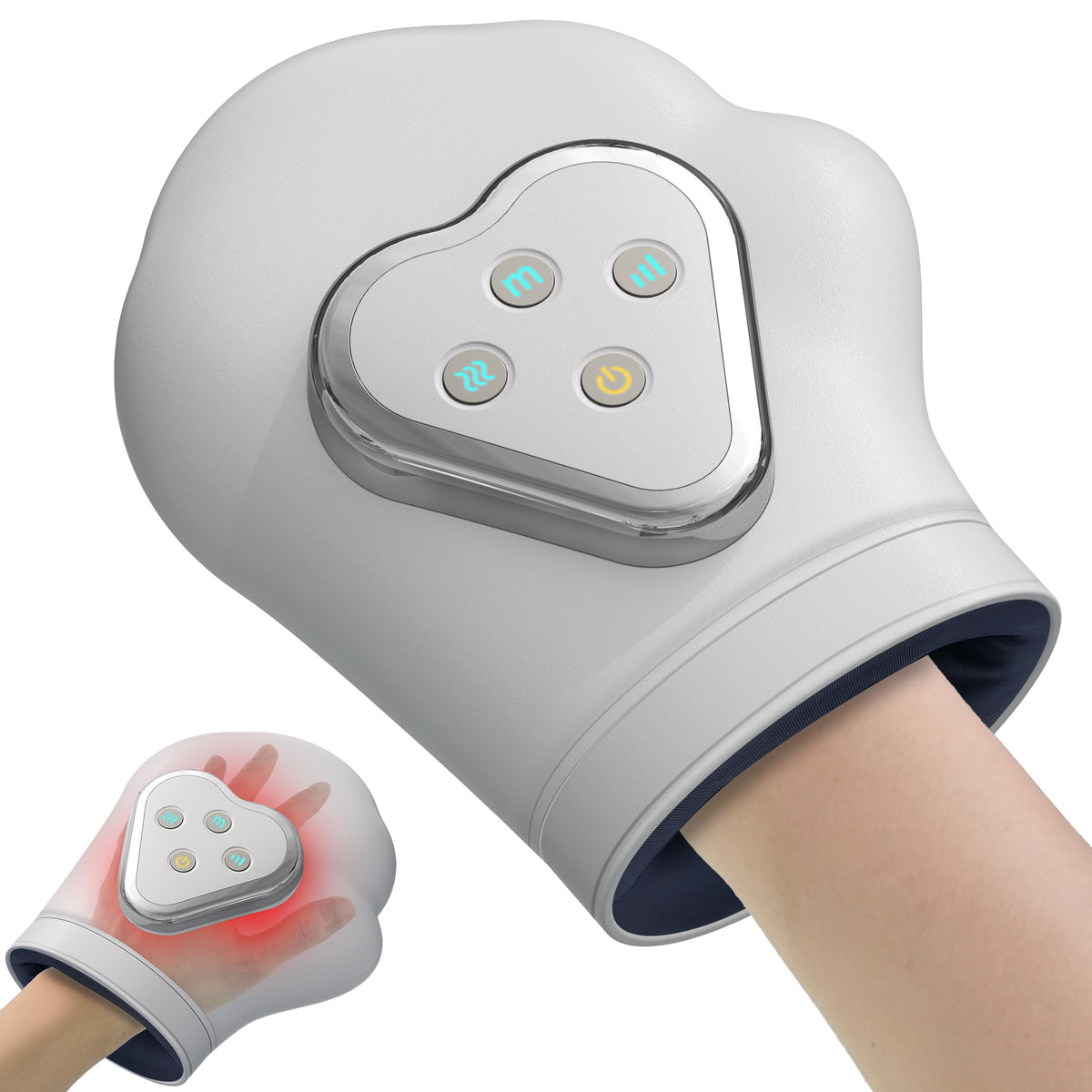

Introduction: A consumer hand massager can ease everyday hand fatigue, but it belongs to comfort rather than medical care, and that distinction changes how shoppers read relief labels.
Walk down any hand-care aisle, physical or online, and the same word appears again and again: relief. It shows up next to a picture of warm, relaxed hands, and often next to words like arthritis or carpal tunnel, which is exactly where things get confusing. A shopper with tired, achy hands wants to know whether the device will actually help, and a shopper whose hands tingle or feel weak wants to know whether this is the right purchase at all. Those are different questions, and the honest answer starts with separating everyday soreness from a diagnosed condition. Once that line is clear, relief language becomes much easier to read for what it is, and much more useful for deciding whether a cordless hand massager fits your day.
Why Everyday Soreness Is Not the Same as a Medical Diagnosis
Everyday hand soreness has a familiar shape. It arrives after a long stretch of low-level effort: typing and mouse work, gripping tools, holding a phone, knitting, gardening, carrying grocery bags. The muscles and tendons in the fingers, palm and wrist feel tired, tight and heavy, and the feeling fades after a break, a warm shower or a change of position. Nobody needs a diagnosis to recognize it, because it is a sensation rather than a condition. That matters for buying decisions, because sensations respond well to comfort measures, and a consumer device can reasonably be designed around comfort. A diagnosis is a different kind of thing altogether. Carpal tunnel syndrome, as described by the Cleveland Clinic, shows up as numbness and tingling in the thumb, index, middle finger and part of the ring finger, often worse at night, sometimes with weakness or a tendency to drop objects. Those patterns point to nerve compression and get sorted out through a medical history and examination. So the practical split for anyone shopping is simple: hands that feel tired and ease up after a rest are a comfort question, while hands that go numb, tingle, lose grip strength or wake you at night are a clinical question. The most common misconception is that a "relief" label on a hand massager must mean the device works like medical care. It does not. What warmth, air compression and pressing nodes actually do is change the way a tired hand feels: tissue loosens, the sensation of tightness softens, and the hand feels more relaxed afterward. That is the same broad category of experience as a hot towel or a stretch break. Massage therapy research summarized by NCCIH points to modest, supportive benefits rather than a fix, which fits exactly where a wellness-grade massager sits: genuine comfort, described honestly.
How Relief Language Changes When Arthritis or Carpal Tunnel Is Mentioned
On a consumer product, relief describes easing a feeling. When a listing attaches that word to arthritis or carpal tunnel, the wording moves into a stricter space. The Federal Trade Commission's health products guidance requires health-related claims to be truthful, not misleading, and backed by competent scientific evidence, and the standard rises quickly once a product implies it changes the course of a disease. The FDA's general wellness policy is the reason low-risk relaxation products can be sold at all without device status: they stay in the wellness lane and keep their language on comfort, relaxation and temporary easing of everyday stiffness. A hand massager with heat and compression fits that lane neatly when its wording stays there.
1. A Consumer Hand Massager Belongs to Everyday Comfort, Not Clinical Care
Look at what the hardware actually does and the boundary explains itself. Heat warms the hand, air compression squeezes and releases around the fingers and palm, the massage nodes press along the surface, and six levels let one person choose a lighter or firmer session depending on how the hand feels that day. Covering fingers, palm and wrist in a cordless body means it can sit on a desk and be used for fifteen minutes without rearranging a workspace. All of that is pleasant for hands that feel tight after a long typing session, and all of it stays in the comfort lane. When a listing mentions arthritis, the honest framing is comfort for hands that feel stiff, not management of a joint disease.
2. Persistent or Worsening Symptoms Belong in a Professional Conversation
Some signals should move the conversation out of the shopping cart entirely: numbness or tingling that keeps returning, weakness in the grip, dropping objects, pain that wakes you up, swelling, redness or heat in a joint, or soreness that lasts for weeks or gets steadily worse. Those are the patterns clinicians evaluate, and physical therapy guidance for carpal tunnel syndrome describes structured care programs that a hand massager can sit beside at most. A simple rule covers most situations. Use the device on the days your hands feel tired, and book an appointment for the days they feel wrong.
What a General Wellness Hand Massager Can Honestly Offer
The honest list of what a device like this delivers is shorter and more concrete than the marketing usually suggests. It offers temporary comfort after a long day of typing or gripping. It creates a warm, relaxed feeling during a session of roughly fifteen minutes. It gives you a reason to sit still and stop using your hands for a while, which is often the part that helps most. And it covers fingers, palm and wrist rather than a single pressure point, from a cordless body with six levels so the same person can go gentle on a tender day and firmer on a good one. A shopper can check every one of those points against a feature list and against their own experience after a few uses. What honesty looks like on the other side of the line is equally concrete. The device gets described as an everyday comfort tool for tired hands, not as a way to manage a disease. Relief language stays attached to muscle tiredness and stiffness. Anyone with persistent symptoms gets pointed toward a clinician rather than toward a checkout button. Digitnow's cordless hand massager, for example, is described with heat and compression, six shiatsu-style levels, and coverage across fingers, palm and wrist, which is exactly the feature set the comfort lane calls for. Reading that list tells you what the device is built to do before you decide whether it matches what you actually want from it. A quick reading habit makes the whole category easier to judge. Ask whether the relief wording is anchored to comfort or borrowed from medicine. Ask whether the features are specific enough to picture a real session. Ask whether the listing tells you where the device stops and a clinician begins. Listings that answer all three clearly tend to be the ones worth trusting, because they know precisely which lane they are in and are not trying to blur it.
Conclusion
Everyday hand soreness and a diagnosed condition like arthritis or carpal tunnel syndrome are different questions, and a consumer massager belongs firmly to the first. Warmth, air compression, six levels and full finger-to-wrist coverage make a real difference to how tired hands feel at the end of a working day. That is comfort, and comfort is a specific, useful promise rather than a watered-down version of medical care. Shoppers who keep relief language tied to everyday tiredness, and who take persistent numbness, weakness or night pain to a professional, get the most out of the category and avoid the disappointment that comes from expecting a wellness device to do a clinician's job.
FAQ
Q: What does pain relief mean on a consumer hand massager label?
A: On a consumer product, relief refers to easing the feeling of everyday tiredness and stiffness. Warmth, pressure and squeeze-and-release compression can make a hand feel looser and more relaxed for a while, in the same way a hot shower helps a tired back. It describes a temporary comfort effect, not a change to a medical condition, even when the same label names arthritis or carpal tunnel.
Q: Can a hand massager cure arthritis or carpal tunnel syndrome?
A: No. Both are medical conditions that clinicians diagnose and manage with their own care plans, and a consumer massager is not a medical device. What a device like this can do is make a tired, stiff hand feel better for a while during everyday use. Anyone whose symptoms are persistent, painful at night or getting worse should speak with a healthcare professional rather than rely on a comfort product.
Q: How can I tell whether hand soreness is everyday fatigue or something more serious?
A: Everyday fatigue feels like tiredness and tightness that eases after rest, a warm shower or a change in activity. Patterns worth a professional look include numbness or tingling in the thumb, index and middle fingers, symptoms that wake you at night, weakness or dropping objects, swelling or redness in a joint, and soreness that lasts for weeks or keeps getting worse. The Cleveland Clinic's overview of carpal tunnel syndrome describes these patterns clearly.