
Introduction: A body massager with 4 speeds and 6 heads works best when you match each head and speed to the muscle group you just trained.
After a hard session, your legs and back feel heavy. You want ten minutes of physical relaxation before you shower and eat. The tool in your bag has four speed settings and six interchangeable heads, and that is where many people hesitate: they grab one head, turn the speed to maximum, and hold it on the sorest spot. A short, deliberate routine gets more from the same device. Match the head to the area, work through the four speeds without overdoing one spot, and plan a compact post-workout session that ends on its own.
Matching Massage Heads to Common Muscle Groups After Training
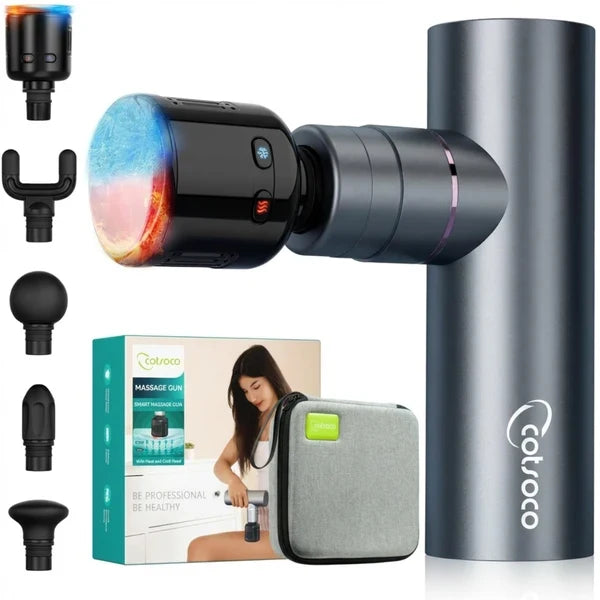
Six interchangeable heads serve different contact areas. On the Digitnow M893-almond mini muscle massage gun, the main difference is contact area. A broad, flat head spreads the motor output across a wider patch of tissue, which suits large surfaces you train hard: quads, glutes, lats, and the broad upper back. A rounded head sits in the middle and works well on the meatier center of a muscle. A narrower, pointed head concentrates contact on smaller contours such as the top of the forearm, the edge of the calf, or the area beside the shoulder blade. The shape-to-area match matters more than the label on the head. Comfort decides which head actually works for you. Start with the head that feels stable on the area, not the one that looks most aggressive. If the head skips, digs, or makes you tense up, the contact area is wrong for that spot. Switch to a broader shape and try again at the same low speed. Move around bony landmarks such as the shin bone, elbow, collarbone, and spine rather than pressing into them. The silicone sleeve helps here: a steady grip lets you glide the head slowly instead of squeezing harder to keep it on target.
Using Four Speed Settings Without Overworking One Area
Four speeds are a range, not a ladder you have to climb. Most post-workout sessions on this body massager stay on the lower two settings, because the goal is to help a tired muscle feel more comfortable, not to test how much it can take. Follow this order to keep the session controlled:
1. Start on the lowest speed and check how the muscle responds. The head should feel like a steady, tolerable buzz over the muscle belly, not a sharp poke. Give it 20 to 30 seconds before deciding, then step up one level only if you want more.
2. Glide slowly along the muscle instead of holding one spot. Move the head down the length of the muscle, covering the whole belly rather than parking on the sorest point. Slow movement at a moderate speed covers more tissue than fast movement at a high speed.
3. Keep each area short and skip heavy pressing. Pressure is not the same as progress, and pressing hard drives the head into bone and sensitive spots. Light contact with a 30 to 60 second pass per muscle group is a sensible default.
4. Let the 10-minute auto-off close the session. The M893-almond shuts down after 10 minutes, which is a built-in cue to stop rather than restart. Running a second full cycle on the same area works against the whole point of short, localized work.
Overworking one area is the most common mistake people make with a percussion massager. A muscle that is already fatigued from training responds better to a brief, even pass than to a long aggressive one that leaves it feeling bruised the next day. Sharp pain, swelling, bruising, or pain that shows up with normal movement is different from ordinary post-workout heaviness; see a clinician rather than continuing to massage.
Planning a Short Post-Workout Routine With Six Heads
You do not need all six heads in one session. Two or three cover a normal post-training routine, and rotating them by body area keeps the session short and organized. On a leg day, the broad flat head handles quads and glutes, a rounded head works the hamstring and inner thigh, and a narrower head finishes along the calf edges and around the ankle without pressing on the bone. On an upper-body day, the broad head covers the lats, the rounded head moves across the upper back, and the small head works beside the shoulder blade and along the forearm. The heads swap in seconds, so the transition costs you almost nothing. Ten minutes is enough time for four to six areas if you keep each pass around a minute. That pacing is why the auto-off matters: it turns "ten more seconds" into a fixed end point, and you can plan the order before you start. The low-noise brushless motor is rated as low as 45dB, so you can run this routine in a gym locker room or your living room without disturbing anyone nearby, and the ultra-compact body fits a gym bag next to a water bottle. Charging runs through a Type-C 5V/2A input, so a laptop port or a phone charger works; the adapter is not included, which is worth remembering before a trip. Three or four short sessions a week fit most training schedules better than one long weekend session. A muscle that gets a quick pass after each workout tends to feel more manageable than one that is ignored all week and then worked over for thirty minutes. If a spot feels genuinely painful rather than tired, step back and treat it as a recovery question, not a massage question.
Conclusion
Pick two heads for the areas you trained, start on the lowest speed, move slowly along the length of the muscle, and let the 10-minute auto-off end the session. That simple loop covers most post-workout physical relaxation with a body massager, and it keeps you from leaning on one sore spot for too long. If you are choosing between configurations or want this mini muscle massage gun for a gym bag, check current stock and bundle details, then contact us with any questions about ordering, accessories, or delivery before you buy.
FAQ
Q:Which massage head should I use for large muscle groups after training?
A:Use the broadest, flattest head in the set for quads, glutes, lats, and the upper back. A wide contact area spreads the movement across more tissue, which feels more stable and covers ground faster than a pointed head. Keep the speed low, glide slowly along the length of the muscle, and switch to a smaller head only when you move to narrow areas like the forearm or calf edge.
Q:How many speed settings should I use on a body massager?
A:Start with one setting, not four. Begin on the lowest speed, let it run for 20 to 30 seconds, and step up only if you want more intensity. Most post-workout sessions stay on the lower two settings, and the highest levels are best saved for brief passes on thick, large muscle groups rather than long holds on smaller areas.
Q:How long should I use a massage gun on one muscle area?
A:Keep a single area to roughly 30 to 60 seconds and move on. A full post-workout routine of four to six areas fits comfortably inside the 10-minute auto-off window on the Digitnow M893-almond, and that shutdown is a useful signal to finish rather than restart. Even coverage across the area is the goal, so keep the pass brief and move on.